Unconventional Superconductors
Introduction
Superconductivity beyond the conventional BCS paradigm reveals rich physics tied to symmetry, topology, and multicomponent order parameters. These unconventional superconductors often break additional symmetries, including time-reversal symmetry (TRS), leading to spontaneous internal currents, complex gap structures, and multiple superconducting phases.
Figure 0.1: Schematic classification of superconductors.
- Conventional (s-wave, TRS-preserving) vs. unconventional (d-wave, p-wave, multicomponent, TRS-breaking).
- Highlights the multicomponent order parameters that give rise to internal currents.
Symmetry Analysis and Ginzburg–Landau Theory
Unconventional superconducting states are classified according to the irreducible representations of the crystal point group. Multicomponent order parameters arise from degeneracies in these representations, permitting complex relative phases between components.
Figure 0.2: Schematic of multicomponent order parameters in a unit cell.
- Shows three symmetry-related atomic sites with arrows representing the phase of the superconducting component.
- Complex phases between components can generate spontaneous circulating currents.
The Ginzburg–Landau free energy for a multicomponent order parameter can be written as:
where the terms encode crystal symmetry constraints. Minimization predicts possible superconducting phases and TRS-breaking states.
Figure 0.3: Free energy landscape of a two-component order parameter.
- Panels illustrate: (a) TRS-preserving minimum ( and in phase), (b) TRS-breaking minimum ( and with relative complex phase).
Figure 1: Cartoon of unconventional ordering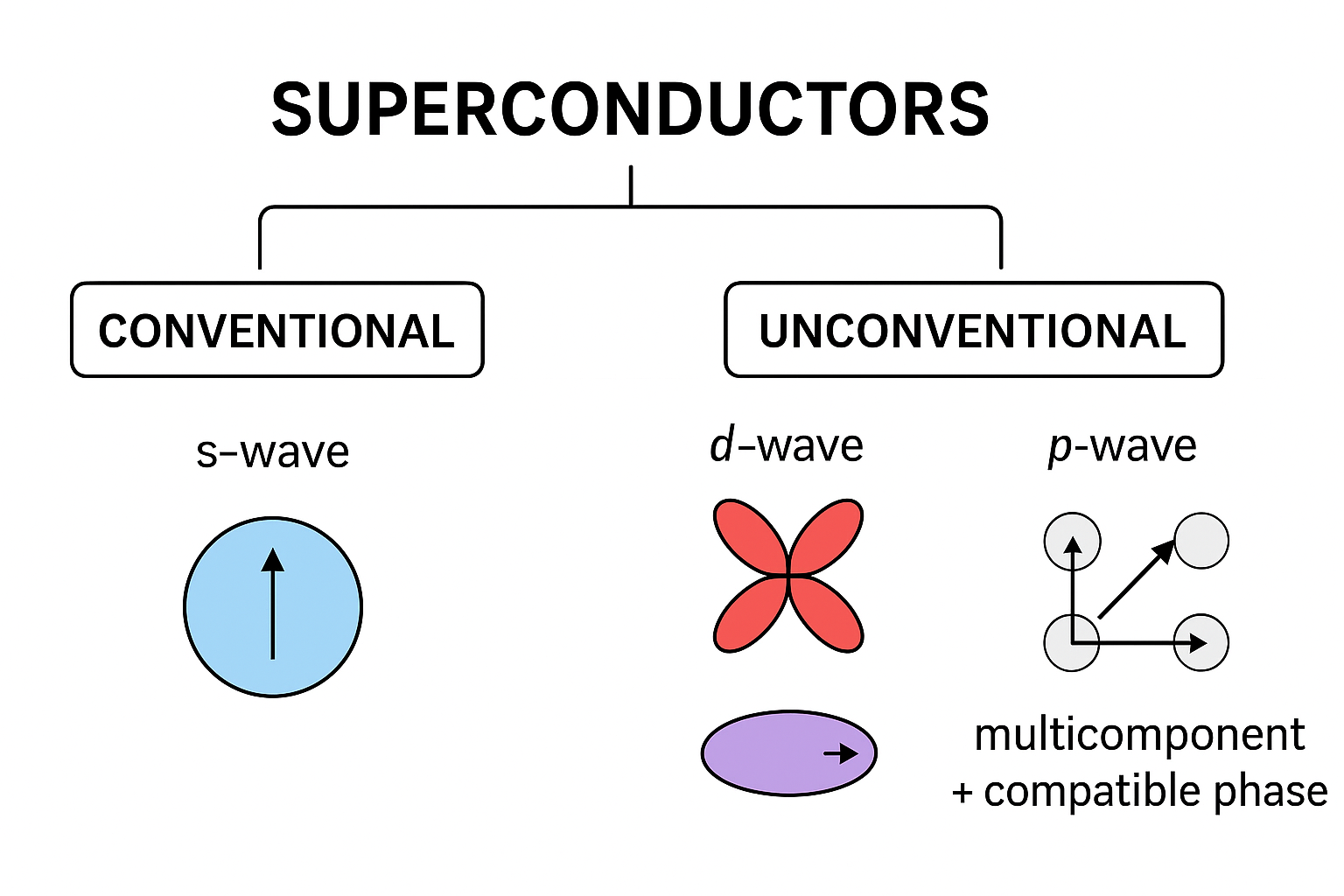
Time-Reversal Symmetry in Superconductors
Classical TRS
TRS maps and reverses magnetic fields. Conventional superconductors preserve TRS; chiral or complex order parameters break it spontaneously, producing internal magnetic fields and circulating currents.
Figure 0.4: Illustration of TRS-breaking order parameter.
- Arrows around a lattice site indicate circulating currents.
- Comparison of TRS-preserving (no net circulation) vs. TRS-breaking state.
Experimental Detection of TRS Breaking
Zero-Field Muon Spin Relaxation (ZF-µSR)
- Muons implanted in a superconductor detect local magnetic fields from TRS-breaking currents.
- Enhanced relaxation below signals broken TRS.
Figure 2: Schematic ZF-µSR experiment. TODO request permission (link)
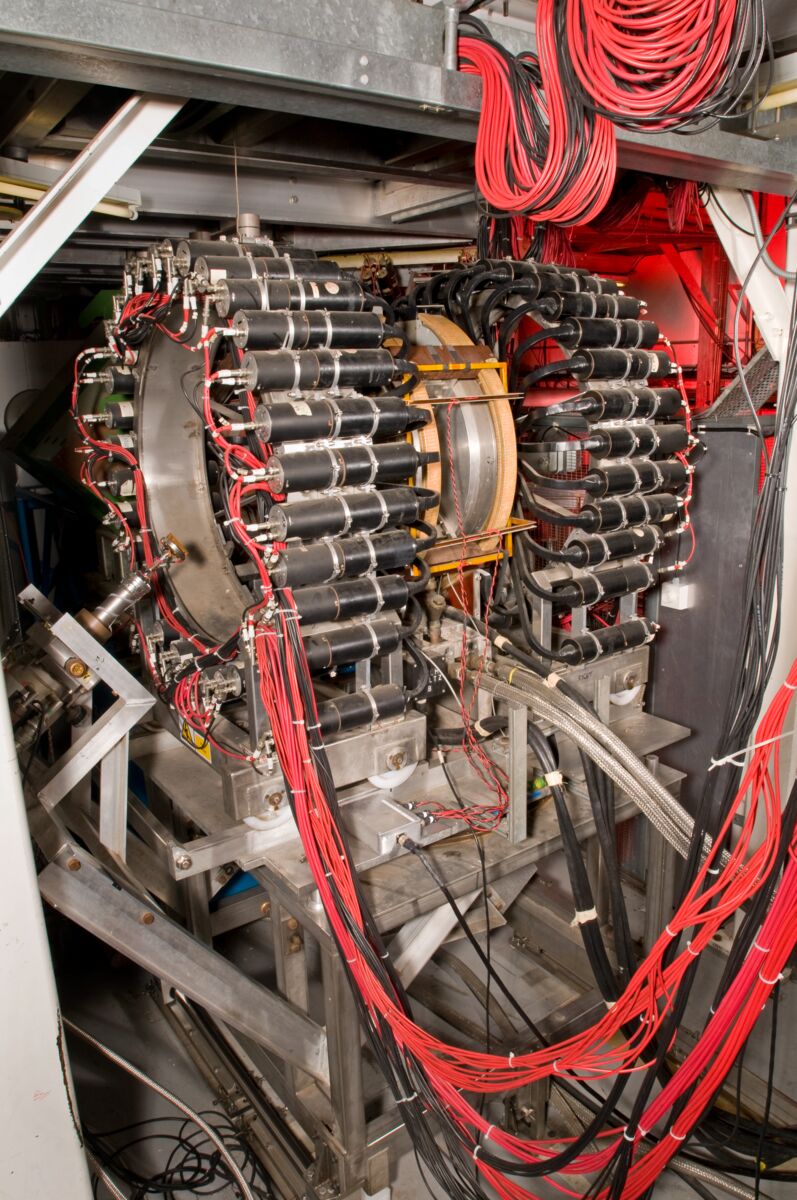
Figure 3: Cartoon ZF-µSR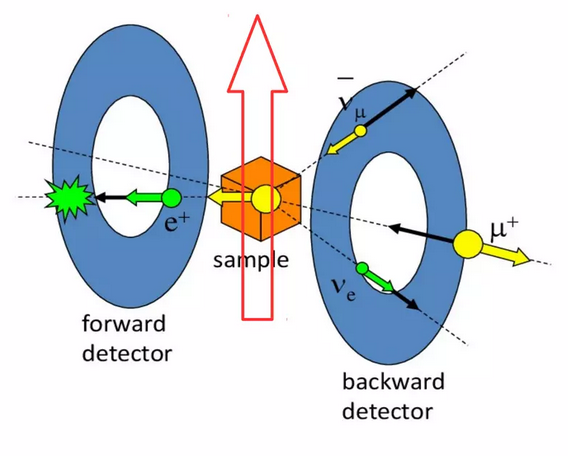
- Shows implanted muons precessing in local fields generated by spontaneous superconducting currents.
Would be nice to discuss this but article is behind paywall and Kent’s “New JISC” membership does not have access… This article is obviously not interesting enough for Scihub to host it. link
Kerr Effect
- Measures rotation of polarization of reflected light.
- Sensitive to TRS-breaking; observed in SrRuO and UPt.
Figure 0.6: Schematic of polar Kerr effect measurement.
- Incident linearly polarized light reflects from sample; rotation angle indicates TRS breaking.
Material Examples
High- Cuprates
- -wave symmetry, TRS-preserving, nodal gaps.
Figure 0.7: Cuprate gap structure on Fermi surface.
Heavy-Fermion Superconductors
- UPt: Multicomponent order; multiple superconducting phases.
- PrOsSb: Cubic skutterudite, TRS-breaking phase.
- (U,Th)Be: Complex phase diagram, TRS-breaking signatures.
Figure 0.9: UPt phase diagram with multiple superconducting phases and TRS-breaking regions.
Figure 4: luke et al nature 1993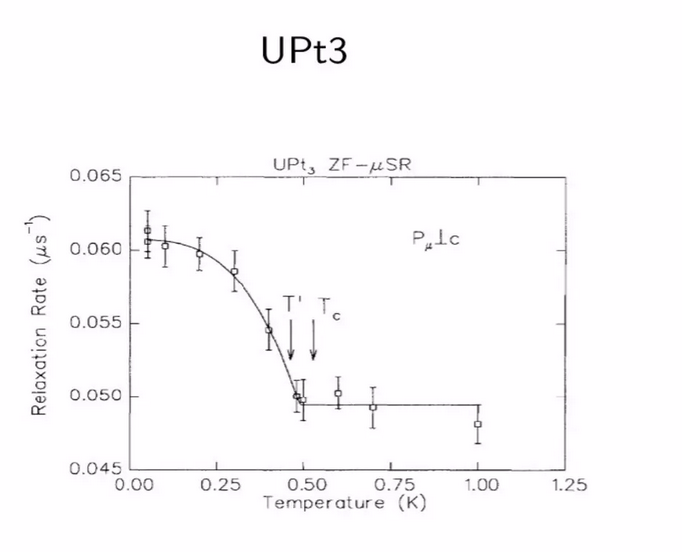
SrRuO
- Candidate chiral -wave superconductor ( two-component order).
- TRS-breaking confirmed via µSR and Kerr effect.
Figure 5: luke et al nature 1998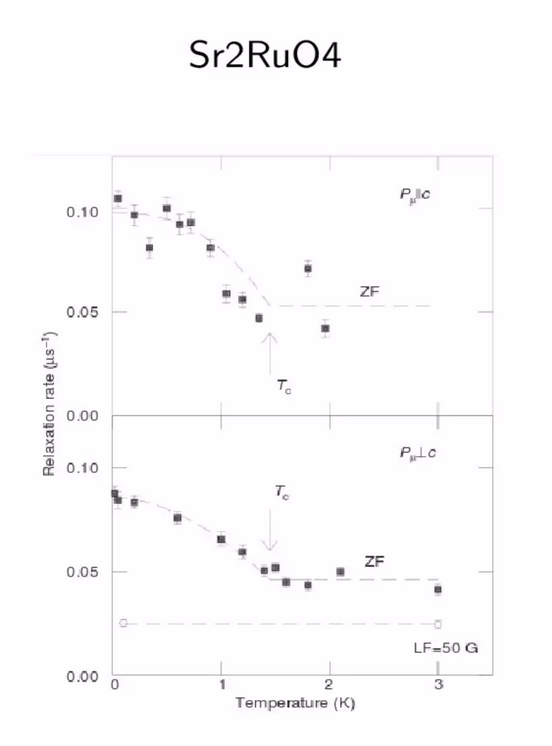
Figure 0.8: Chiral p-wave gap on cylindrical Fermi surface of SrRuO.
Noncentrosymmetric Superconductors
- LaNiC, LaNiGa: Lack inversion symmetry; allow singlet-triplet mixing.
- TRS-breaking detected via µSR despite conventional thermodynamics.
Figure 0.10: Schematic of noncentrosymmetric crystal structure enabling mixed singlet-triplet pairing.
Summary
- Multicomponent order parameters enable complex relative phases and spontaneous TRS breaking.
- Ginzburg–Landau theory provides a framework to classify unconventional superconducting phases.
- µSR and Kerr effect are key experimental probes revealing TRS-breaking order.
- Materials like SrRuO, UPt, PrOsSb, and LaNiC demonstrate diverse mechanisms of unconventional superconductivity.
Figure 0.11: Summary diagram linking crystal symmetry, multicomponent order parameters, TRS breaking, and experimental probes.
This chapter sets the stage for loop supercurrents, in which multicomponent order parameters and symmetry allow microscopic circulating currents inside a single unit cell.